Table of Contents
- The Stages of a Criminal Case in Pennsylvania
- Your Trial Preparation Checklist for Defendants
- Bench Trial vs Jury Trial in Pennsylvania
- Pretrial Motions and the Discovery Process
- Courtroom Decorum and Communicating With Legal Counsel
- Mental Health and Budgeting for Your Defense
- Frequently Asked Questions
Last Updated: September 27, 2026
The Stages of a Criminal Case in Pennsylvania
Preparing for a criminal trial in 2026 starts long before a jury is seated in a criminal trial. In Pennsylvania, most cases move through a set sequence: a preliminary arraignment, a preliminary hearing, formal arraignment, pretrial motions, and then either a negotiated plea or trial. Each stage shapes what happens next, and what you do at one stage can limit your options at another. (Source: the Commonwealth must show a prima facie case)
At Donohue Law, LLC, we walk clients through this sequence step by step so nothing catches them off guard.
From Preliminary Hearing to Trial
The preliminary hearing is where the Commonwealth must show a prima facie case, meaning enough evidence to send the matter to the Court of Common Pleas. It is not a mini trial, but it is not a formality either. Defense counsel can cross-examine witnesses and lock in testimony.
After that come the formal arraignment, the discovery process, and pretrial motions. Only a small share of cases actually reach a jury. Many resolve through plea bargaining or a bench trial, but you prepare for trial either way.
Your Trial Preparation Checklist for Defendants
A trial preparation checklist for defendants keeps the process manageable, but the items only matter if you understand how each one gets used. In Pennsylvania practice, the defense case is built from the discovery packet the Commonwealth produces after formal arraignment, and everything you gather should be organized against that packet. Start by collecting documents, then identify witnesses, then review discovery with your lawyer. Do not contact witnesses on your own, and do not post about the case online.
Documents, Witnesses, and Evidence to Gather
Bring your lawyer everything relevant, even items that seem unhelpful. What looks damaging in isolation often explains context, and your attorney needs the full picture before deciding what helps.
- Charging documents, bail paperwork, and court notices
- Police reports and any citations you received
- Names and contact details for witnesses
- Photos, videos, or messages tied to the incident
- Work, medical, or treatment records that may matter
- A written timeline of events in your own words
- Any paperwork from a prior case, probation, or ARD placement
- Receipts, GPS history, or phone records that place you somewhere else
How Discovery Actually Reaches You
In Pennsylvania, the defense does not automatically receive the full investigative file the day charges are filed. Discovery generally flows after the formal arraignment in the Court of Common Pleas, and it can arrive in batches. Your lawyer reviews police reports, lab results, body-worn camera footage, 911 audio, and witness statements, then compares that material against your timeline. Gaps between the two are where suppression motions and credibility arguments come from. If something in discovery is missing, your attorney can file a motion to compel.
Preparing Witness Testimony
Witness preparation is not coaching, and it is not something you should attempt yourself. Your lawyer will typically meet with defense witnesses before trial, walk them through the layout of the courtroom, explain how direct and cross-examination work, and go over the questions likely to come up. A witness who has never testified may be surprised by how narrow the questions are and how quickly objections interrupt. Preparation reduces that surprise.
If you are considering whether to testify, that decision belongs to you, but it should be made with your attorney’s advice and well before trial.
Digital Evidence in 2026
Most cases now involve some form of digital evidence: text threads, social media posts, rideshare receipts, doorbell camera clips, or location data. Preserve all of it. Do not delete anything, do not “clean up” your accounts, and do not ask friends to remove posts. Deleting texts, posts, or videos can be treated as destruction of evidence. Preserve everything and let your attorney decide what helps.
Deleting texts, posts, or videos can be treated as destruction of evidence. Preserve everything and let your attorney decide what helps.
What Not to Do
- Do not discuss the case with anyone other than your lawyer, including family and cellmates.
- Do not contact the alleged victim or any witness.
- Do not post about the charges, the court date, or your attorney online.
- Do not miss a court date. A missed hearing can lead to a bench warrant.
If you are charged in Lehigh County or Northampton County, our criminal defense overview | /criminal-defense/ walks through how these steps apply in Allentown, Bethlehem, and Easton courts.
Bench Trial vs Jury Trial in Pennsylvania
In a bench trial, a judge decides both the facts and the law. In a jury trial, a jury decides guilt while the judge handles legal rulings. The choice between a bench trial vs jury trial in Pennsylvania depends on the facts, the charges, and the evidence.
In practice, the decision often turns on whether the evidence is technical or emotional. Cases heavy on documents may suit a judge; cases resting on credibility may suit a jury.
Pretrial Motions and the Discovery Process
Pretrial motions can change a case before trial begins. The discovery process is how both sides exchange evidence, and it is where your lawyer looks for weaknesses in the Commonwealth’s proof. Motions can challenge evidence admissibility, suppress statements, or seek dismissal.
Common pretrial motions include:
- Motions to suppress evidence from an unlawful search or seizure
- Motions to suppress statements taken in violation of your rights
- Motions to compel discovery the Commonwealth has not produced
- Motions in limine to limit what the jury hears
Courtroom Decorum and Communicating With Legal Counsel
Courtroom decorum is straightforward: dress neatly, stand when the judge enters, speak only when addressed, and stay calm. Your demeanor is part of your case. Jurors notice how a defendant behaves.
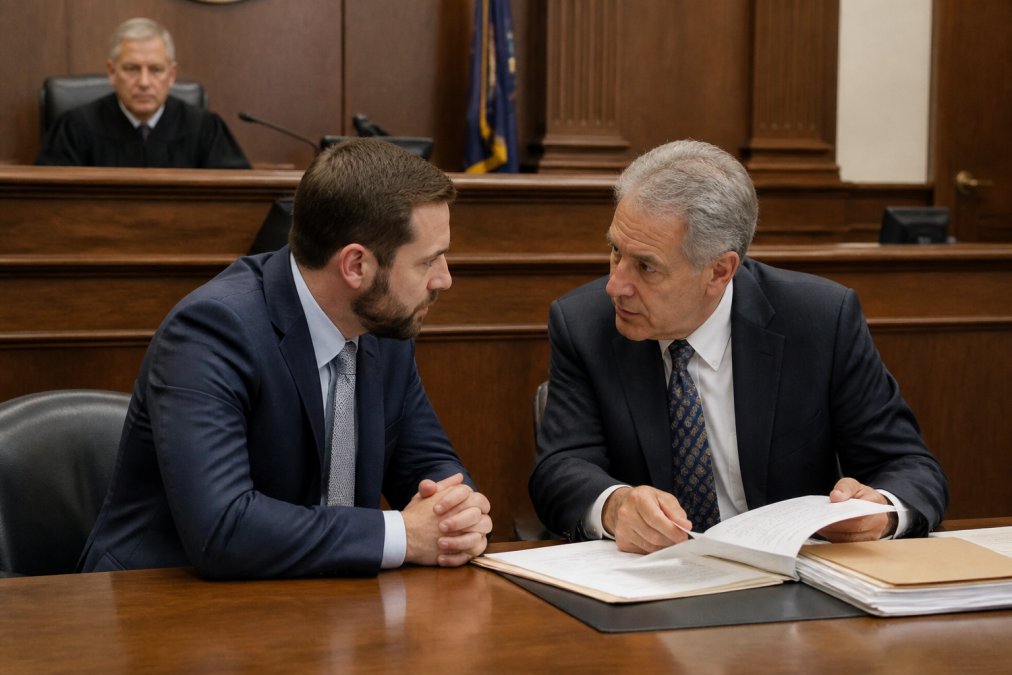
You are not expected to argue your own case. Your job is to be present, composed, and honest with your attorney.
Mental Health and Budgeting for Your Defense
Most guides to trial preparation focus on motions, discovery, and courtroom rules. Two things they almost never address are the ones that wear defendants down between hearings: the emotional toll of a pending case and the cost of defending it. Both deserve a straight answer.
The Emotional Side of a Pending Trial
A criminal trial can sit over your life for months. Arraignment, continuances, and pretrial conferences stretch the timeline, and the uncertainty is often harder than any single court date. Common reactions include trouble sleeping, loss of appetite, irritability, difficulty concentrating at work, and withdrawal from family and friends. Those reactions are normal, and they are not a sign that your case is going badly.
A few things help:
- Keep a routine. Work, exercise, and regular meals give structure to a process that otherwise feels out of your control.
- Limit how often you read about your own case online. Repeatedly searching your name rarely produces new information and reliably raises anxiety.
- Tell one or two trusted people what is happening. Carrying it alone makes it heavier.
- Ask your lawyer what the next 30 days actually look like. Uncertainty is easier to manage when you know the next step.
Budgeting for a Criminal Defense
Defense costs vary widely depending on the charge, the complexity of the evidence, and how long the case runs. A misdemeanor that resolves at the preliminary hearing stage looks very different from a felony that goes to a jury trial with expert witnesses. Rather than guess at numbers, ask a lawyer directly about fees and payment options, and ask early.
Questions worth asking before you hire anyone:
- Is the fee flat or hourly, and what does it cover?
- Does the quoted fee include the preliminary hearing, or is that a separate stage?
- What happens to the fee if the case is continued or goes to trial?
- Are there separate costs for investigators, experts, or transcripts?
- What are the payment options, and is a payment plan available?
Public Defender or Private Counsel
For anyone weighing a public defender against private counsel, the honest answer is that both can be effective. Public defenders in Lehigh County and Northampton County handle heavy caseloads and know the local courts well. Private counsel generally means more time on your case and direct access to your attorney. That difference matters most in complex or high-stakes matters, and it is a decision worth making with full information rather than by default.
Frequently Asked Questions
What should I expect during the pretrial process in Pennsylvania courts?
The pretrial process in Pennsylvania typically includes a preliminary hearing, formal arraignment, and pretrial conferences. Your defense attorney will file pretrial motions, review discovery evidence, and negotiate with the prosecutor. Many cases resolve through plea bargaining before trial, but if no agreement is reached, the case proceeds to trial. Each step has deadlines, and outcomes depend on the facts and circumstances of your individual case.
What is the difference between a bench trial and a jury trial in Pennsylvania?
In a bench trial, a judge decides guilt or innocence. In a jury trial, a panel of citizens weighs the evidence and must reach a unanimous verdict. Jury trials allow voir dire, where both sides question potential jurors for bias. Bench trials move faster and may suit cases turning on legal questions. Your attorney can help you decide which option fits your defense strategy and the specific charges you face.
How long does it take to prepare for a criminal trial?
Trial preparation time varies widely based on the complexity of the charges, the volume of discovery, and court scheduling. Some cases go to trial within months of arraignment, while more complex matters take longer. Your attorney needs time to review evidence, interview witnesses, file pretrial motions, and build your defense. Discuss realistic timelines with your legal counsel early so you can plan accordingly.
How does a former prosecutor’s experience benefit my trial preparation?
A former prosecutor understands how the Commonwealth builds its case, evaluates evidence, and approaches plea bargaining. That perspective helps anticipate prosecutorial strategy, spot weaknesses in the government’s evidence, and prepare stronger pretrial motions. Donohue Law, LLC represents clients in Lehigh County and Northampton County, including Allentown, Bethlehem, and Easton, and draws on that courtroom experience to prepare each case for trial.
Facing charges is frightening, and the road ahead depends on facts only a lawyer can review. Donohue Law, LLC defends clients in Lehigh and Northampton Counties, backed by Attorney Michael J. Donohue’s experience as a former prosecutor and public defender, including more than 40 first-chair jury trials. We know how Pennsylvania courts work and how prosecutors build cases. Call (610) 740-4402 to discuss your situation and get clear answers about your defense.